Stalactites & Stagmites
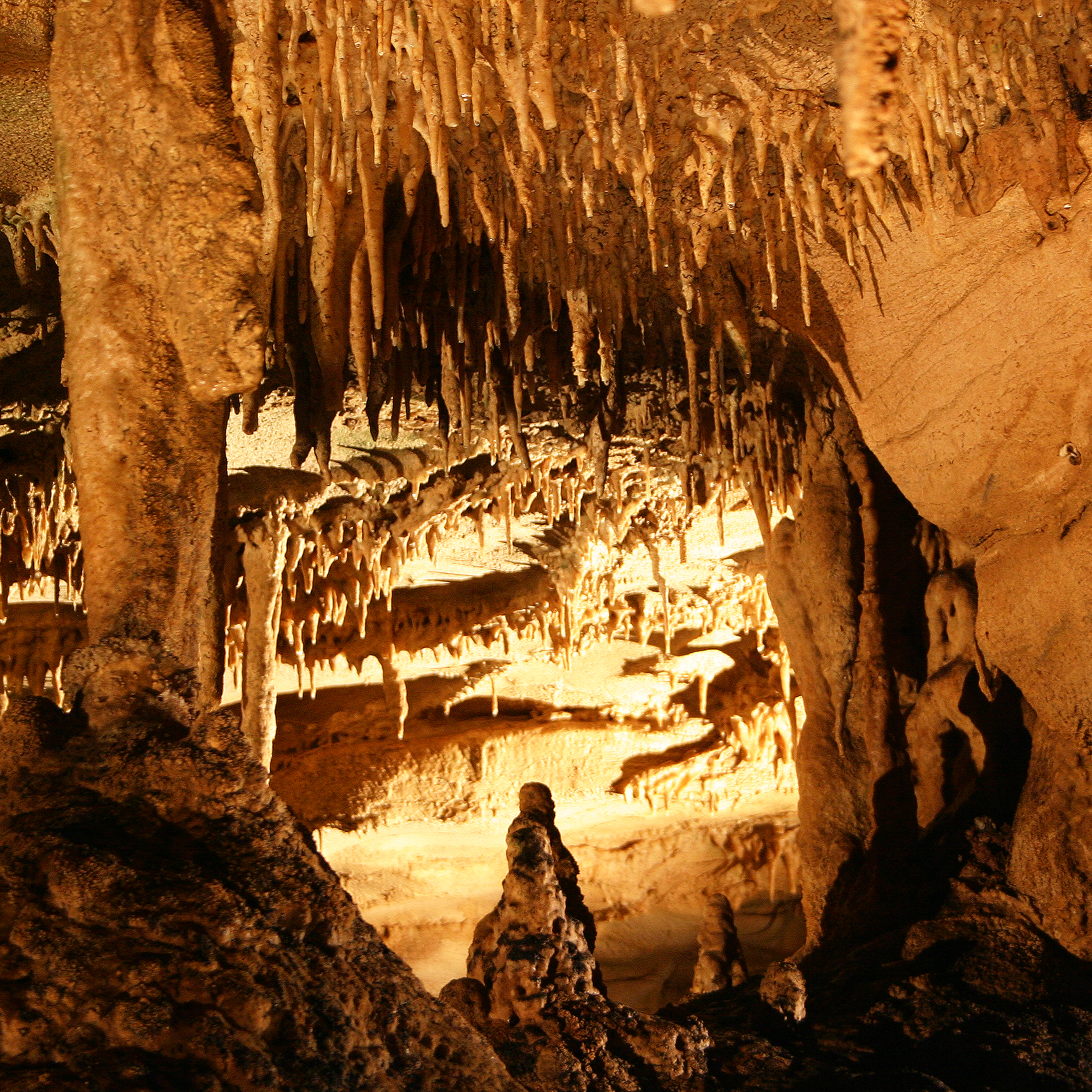
Stalactites--spikes of rock hanging from the roof of a cave--are formed through the dissolution of limestone or dolomite by groundwater. In this case, groundwater descending through the pore space above a preexisting cavern. As that groundwater descends through the ceiling of the cavern, the dissolved ions from the above limestone in the water precipitate out of solution. Over time this creates the distinctive hanging spike formation stalactites are known for.
Stalagmites--spikes of rock protruding from the cave floor--are the result of the incomplete precipitation of dissolved ions in the formation of stalactites. Water that drips off the tips of stalactites still has some dissolved CaCO3 (and other impurities), that only precipitates out of solution after reaching the cave floor. It is of course possible to find both stalactites and stalagmites alone (i.e. not forming together), but they are usually associated with each other--forming through the same process.