Knick Points/Waterfalls
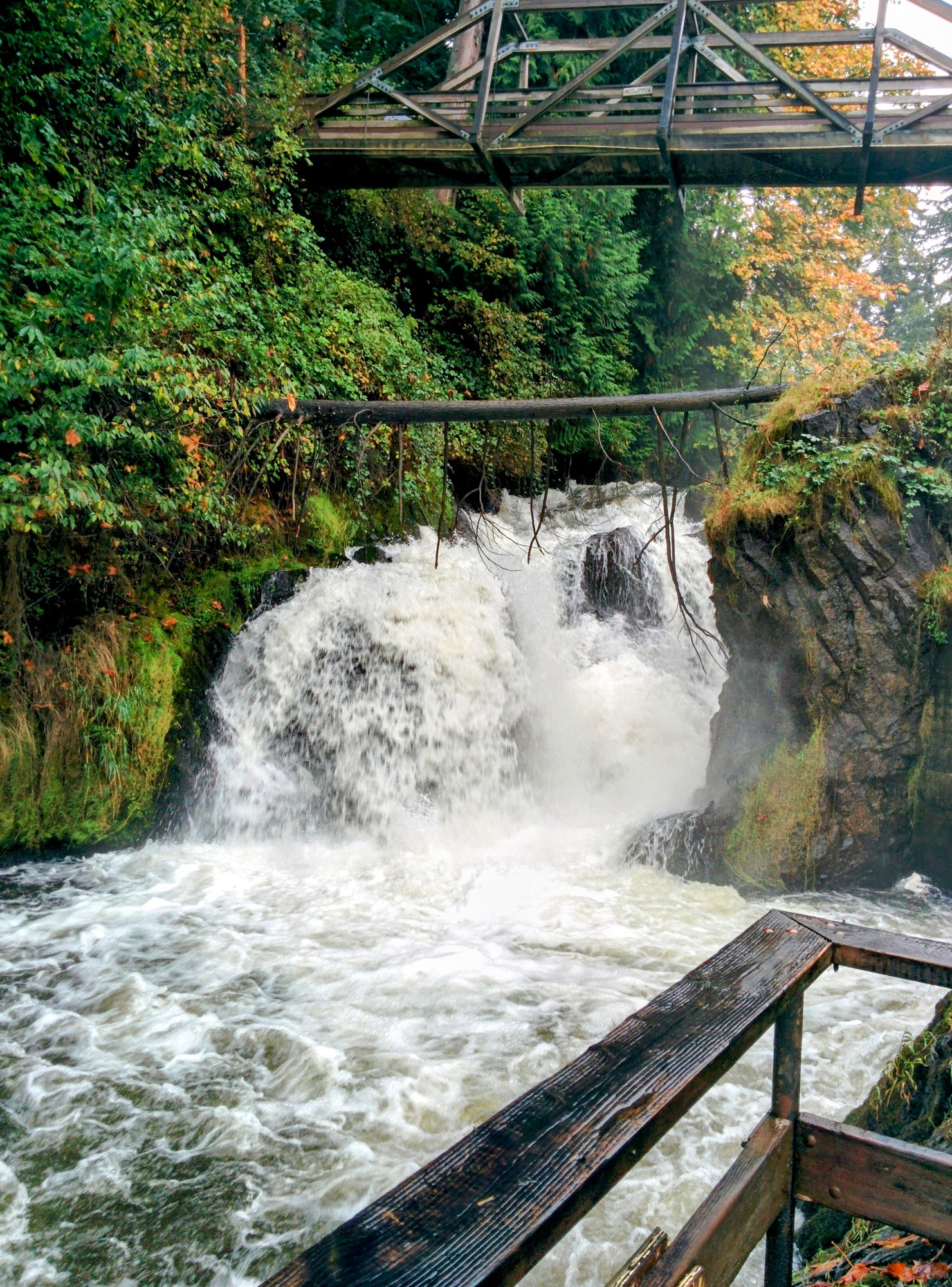
Waterfalls can form in a number of ways. When referred to as a "knickpoint" this usually means that the falls have formed as a result of a drop in base level (e.g. a drop in sea level, tectonic uplift, etc.) which causes the river to incise more aggressively at that drop, creating a knickpoint. Headward erosion then causes that knickpoint to migrate upstream until the slope of the channel is at equilibrium again. Waterfalls can also form when a river flows over different types of rock. In the above image, the elevated part of the channel is incised through basalt bedrock, while the lower part that flows into Capitol Lake is less consolidated sediment. The lower part of the channel erodes away faster than the upper part, causing the formation of the waterfall visible today, but even in that case, the waterfall will still migrate upstream over time, and eventually return to equilibrium.