Loess Hills
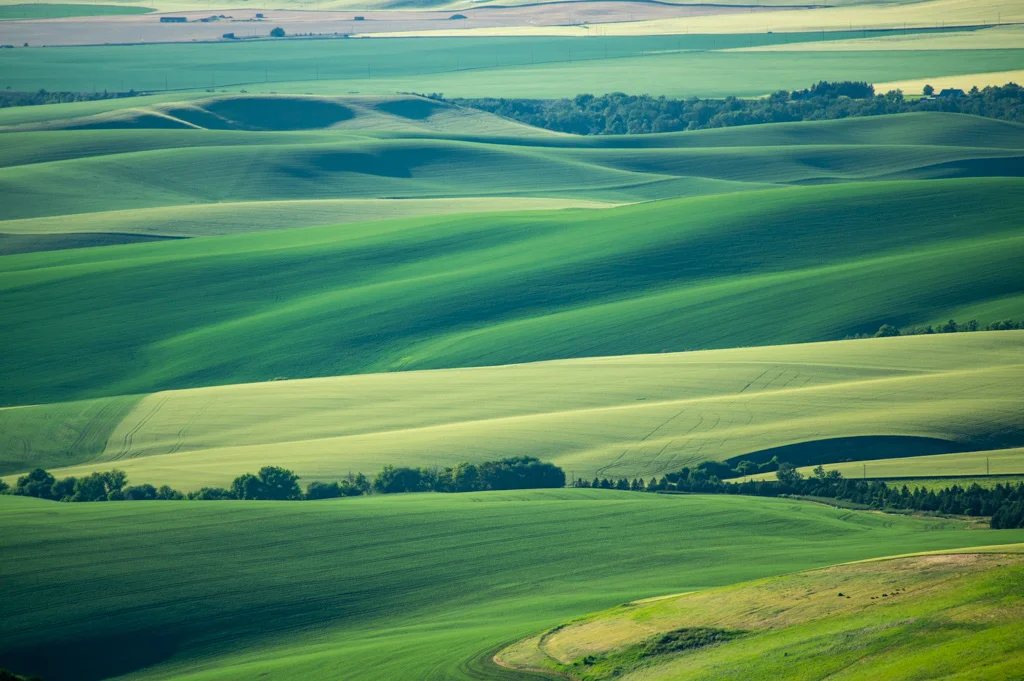
Loess is fine-grained silty sediment transported and deposited in rolling hills by wind. However, loess itself is often generated by the grinding of sediment under glaciers. Given this, it might seem strange that loess hills are so ubiquitous even in areas (like Walla Walla) that were not glaciated during the last glacial maximum (LGM) 21Ka.
The explanation for this is that much of the loess now present in the Palouse was transported initially by floodwaters. Around 13-15Ka, during the recession of the LGM, glacial lake Missoula cyclically broke the ice dam holding it in place, causing massive floods to pore over hundreds of miles of land. Carried in these floods was the very same silty sediment generated by the movement of glaciers over land that now forms the loess hills of the Palouse. After the floods, this sediment was indeed picked up by wind and redeposited in the rolling hilly formation we know today.